Double-hung windows in Chicago, opening by opening
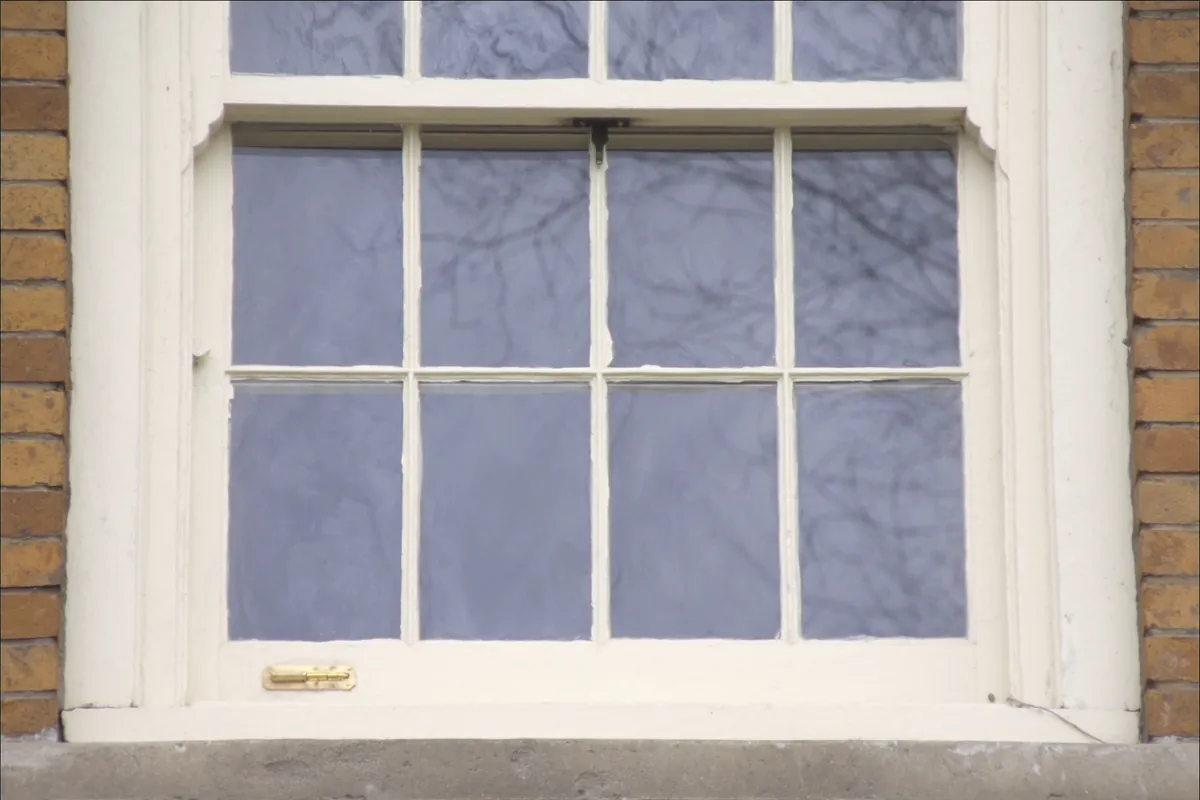
A double-hung window has two sashes in one frame and both of them move vertically, which is the whole difference between it and a single-hung. In Chicago it matters more than that, because double-hung is the documented original type across the city's vintage stock. The Chicago Bungalow Association's design guidelines treat double-hung and casement as the types to keep, and the city's own East Village District landmark report records that "Some original double-hung window sash has been replaced with later double-hung or single-pane sash" in a neighborhood of brick and greystone flats. Both read 2026-08-11. That gives a like-for-like double-hung replacement a second advantage nobody sells you on: Chicago exempts in-kind replacement in an existing opening from a building permit in a residential building up to four stories, and defines in-kind as new elements "of the same type, size, and shape" (chicago.gov, read 2026-08-11). Same type in, same type out, no permit, lowest price.
This page sits under the window types hub, which compares all six types against the openings Chicago's housing stock actually has. One standing note for this page in particular: where it describes how the type works mechanically, that is a general description of a window type and is labeled so.
How a double-hung works, in the words a quote will use
Two sashes sit in one frame, one behind the other, in separate vertical tracks. Both slide up and down. They meet in the middle at a horizontal rail, usually called the meeting rail or the check rail, and the lock sits there and pulls the two sashes together when it is thrown. Air comes in the bottom and out the top when both are open, which is the reason the type persisted in a city with hot, still summers and no air conditioning to speak of when most of this housing stock went up.
Something has to hold a sash where you leave it. On vintage Chicago sash that job is usually done by a counterweight system: a cord or chain running over a pulley at the top of the jamb, down a hollow pocket in the frame, to an iron weight that balances the sash. Newer units use a spring or block-and-tackle balance built into the jamb liner instead. This paragraph is a general description of how the type is built rather than a claim about your house, and the practical reason it belongs on this page is that a broken cord and a failed balance are repair problems. They are not, on their own, a reason to buy a window.
Most modern double-hung units also tilt. Release two catches on the meeting rail, tip the sash inward, and you can reach the outside face of the glass from inside the room. On a single-story house that is a convenience. On the upper floors of a two-flat or a three-flat it is the difference between cleaning a window and hiring someone with a ladder, every year, for as long as you own the building.
Double-hung against single-hung, the comparison that actually comes up
Casement and slider get discussed in showrooms. Single-hung is the substitution that shows up quietly in a written quote, because it looks the same from the sidewalk and costs less. Here is the comparison in full, with the dollar bands attributed and the rest marked as our reading.
| Point of difference | Double-hung | Single-hung |
|---|---|---|
| Sashes that move | Both, upper and lower | Lower only. The top sash is fixed |
| Cleaning the outside face from indoors | Possible on units where both sashes tilt in | Lower sash only. The upper glass stays an outside job |
| Ventilation pattern | Top and bottom openings can be used together | Bottom opening only |
| National price, Today's Homeowner, September 3, 2025 | $430 to $915 | $200 to $400 |
| National average, This Old House, June 23, 2026 | $495 | $397 |
| National price, Modernize, March 17, 2026 | $429 to $915 | $200 to $850 |
| Chicago in-kind permit exemption when it replaces a Chicago double-hung | Clearest case. Same type, same size, same shape | A different named type. We do not guess, and neither should a salesperson |
Price bands read 2026-08-11 at Today's Homeowner (Elisabeth Beauchamp, reviewed by Amy DeYoung), This Old House (Stephanie Minasian-Koncewicz, from a November 2025 survey of 1,000 homeowners) and Modernize (Catie Bonner, reviewed by Isabella Andersen). All three are national figures and none of them is a Chicago figure. The in-kind wording is the city's, read at chicago.gov 2026-08-11; applying it to the single-hung row is our reading, and the Department of Buildings decides permit questions.
The saving on a single-hung is real and it is small against a whole-house total. What you trade for it lasts as long as the window does. That trade is worth making deliberately, in writing, rather than discovering it two years later on the third floor.
Where double-hung is the documented original in Chicago
This is the part a national window guide cannot write, and it is the reason the type question in Chicago is usually already answered before you start shopping.
| Building type | Documented original sash | Source, read 2026-08-11 |
|---|---|---|
| Chicago bungalow | Double-hung and casement, both treated as types to retain | Historic Chicago Bungalow Association Design Guidelines, dated 6/21/2012 |
| Two-flat and three-flat | Double-hung, with some already swapped for later double-hung or single-pane sash | City of Chicago, East Village District landmark designation report |
| Greystone | Double-hung, on the same city report covering the same era of brick and greystone flats | City of Chicago, East Village District landmark designation report |
| High-rise condominium | Not documented. Nothing read for this site establishes an original type for this segment | No source, so no claim |
The bungalow, where the guidelines name the type directly
The Chicago Architecture Center and the Chicago Bungalow Association both put more than 80,000 bungalows in the city, roughly one third of its single-family housing stock, in an arc four to seven miles from downtown. The federal definition of the type describes one to one-and-one-half stories, brick, a rectangular plan, a full basement and a low-pitched roof with overhanging eaves, built in Chicago between 1907 and 1930. Sources put the era differently, out to the mid-1930s, so treat it as a range rather than a pair of dates.
The association's design guidelines are unusually direct about windows for a document of that kind. Its list of things not to do opens with "Replace existing double hung or casement windows with single fixed glass picture or slider windows", and goes on to warn against glass block infill on street-facing elevations, against replacing attic windows with a slider on those elevations, and against removing art glass. Its list of things to do asks owners to retain and repair original frames, "Maintain historic muntin/grille pattern", "Restore or recreate art glass windows", and "Add thin profile wood or metal storm windows and screens similar in size, shape and color to existing windows".
One line in that document carries more money than the rest combined: do not "Enlarge or reduce window openings to fit a stock window frame or change the shape of the window frames". Read plainly, that is a statement that bungalow window work is custom-size work. A quote built around stock sizes is quietly proposing something the guidance for this housing type asks owners not to do, and it is proposing it to the elevation everyone sees.
Chicago Architecture Center, Chicago Bungalow, and Chicago Bungalow Association, Chicago Bungalow; National Park Service, Chicago Bungalows Multiple Property Documentation Form, prepared by Daniel Bluestone, University of Virginia; Historic Chicago Bungalow Association Design Guidelines dated 6/21/2012, read in full at a third-party mirror hosted by oldnorthend.org, with the association's own live windows page carrying the same language. All read 2026-08-11. The guidelines are cited from a mirror and we say so rather than hide it.
Two-flats, three-flats and greystones, where the city says it in its own report
The Chicago Architecture Center describes two- and three-flat apartment buildings as a quarter of Chicago's housing, with more than 76,000 two-unit buildings alone, most completed between 1900 and 1918, typically with an entry porch to one side and a projecting bay of windows on the other. A separate Center article widens the grouping to two-, four- and six-flats and puts that at more than 30 percent of the housing stock. Those are two different groupings measured two different ways, so this page reports both and blends neither.
The original sash statement comes from the city rather than from a preservation group. Its East Village District landmark designation report notes that "Some original double-hung window sash has been replaced with later double-hung or single-pane sash", and classes that swap, inside a landmark district, among "changes considered minor and reversible". Two useful things sit in that sentence. Double-hung is the original type on this stock. And the city itself treats sash replacement as a lower-stakes alteration than losing a cornice, which is a sense of proportion worth having before a preservation conversation starts. It is not permission, and it is not a substitute for review.
On a greystone the opening is the harder problem. Openings are cut into dimensional limestone with carved sills, lintels and surrounds, so the opening is itself a piece of the ornament, and greystone appears on workers cottages, two-flats, three-flats and row houses alike, which is why sizes are not standardized across the type. Trimming an opening to reach a stock window size is visible from the street and permanent. An honest limit on this page: original sash on greystones is documented here only through that city report covering the same era of brick and greystone flats, not through a greystone-specific guideline, so treat this as more thinly sourced than the bungalow material above.
Chicago Architecture Center, Two- and Three-flats, and The tale of the Chicago two-flat; City of Chicago, East Village District landmark designation report. All read 2026-08-11.
The permit consequence, and why like-for-like is the quiet advantage
Chicago publishes a list of work that does not require a building permit. In a residential building up to four stories above grade it includes "Repairing or replacing (in-kind) an exterior window or skylight in the existing opening", and the city defines in-kind as replacement "of existing materials, objects, or elements using new materials, objects, or elements of the same type, size, and shape".
A separate list applies in any building at any height, and it covers repairing damage to an existing window, replacing glass in an existing sash, installing or removing a storm window or an insect screen, and replacing an existing ground-level window in kind including the frame, provided the work does not require cutting away or removing any portion of an exterior wall.
| The job | Inside the city's in-kind wording? | What follows |
|---|---|---|
| Double-hung out, new double-hung in, same opening, same size and shape | Yes. Same type, size and shape | On the no-permit list in a residential building up to four stories above grade |
| Double-hung replaced with a casement, slider or fixed picture unit | No. The type changes | Outside the exemption wording. Treat it as a permit job |
| Double-hung replaced with a single-hung | Unclear. It is a different named type and the city does not address it | Ask the Department of Buildings before ordering, and get the answer in writing |
| Opening widened, heightened or squared off to reach a stock unit | No. The size or shape changes | Outside the exemption, and named in the bungalow guidelines as something not to do |
| Repairing a sash, or replacing glass in an existing sash | Not a replacement at all | On the any-building no-permit list, at any height |
| Any of the above in a building above four stories | The four-story exemption does not reach it | See the Express Permit Program route below |
| Any of the above on landmark property or in a landmark district | The city says its exceptions "may not apply". Settle that question before anything else | |
City of Chicago, work not requiring a building permit, exterior, read 2026-08-11. The wording in the middle column is the city's; applying it row by row is our reading, and the Department of Buildings decides permit questions. Full treatment on do I need a permit.
Above four stories the route changes rather than disappearing. The city's Express Permit Program covers "Replacing a window in an existing wall opening in a building up to 7 stories tall", and the same work in a taller building only "With drawings prepared by an Illinois-licensed architect or structural engineer". It does not cover creating a new opening, a window that has or is required to have fire-rated glass, a window within 10 feet of a fire escape, or, in a building with more than three stories, a window in a wall within two feet of a lot line separating two properties. Every application needs at least one existing-condition photograph and an energy and water efficiency compliance form. Read at chicago.gov 2026-08-11, and covered in full on the Express Permit Program page.
Put the two halves together and you get the single most useful thing on this page. On a bungalow, a two-flat, a three-flat or a greystone, putting a double-hung back where a double-hung was is simultaneously the cheapest option, the one the documented guidance for the housing type asks for, and the one that stays inside the city's own no-permit wording. Those three almost never point the same way. Here they do.
The two ways a double-hung gets installed, and why the word matters on a quote
Two contractors can quote the same house, both write "double-hung replacement", and be describing genuinely different jobs. This is the most common reason Chicago quotes for the same windows come back thousands of dollars apart.
| Insert, also called pocket or retrofit | Full-frame replacement | |
|---|---|---|
| What comes out | The sash and the balance hardware. The existing frame stays in the wall | Sash and frame, back to the rough opening |
| What you can see afterwards | A slightly smaller area of glass, because the new unit sits inside the old frame | The original glass area, if the new unit is specified to the original size |
| What it assumes | The existing frame and sill are sound and square | Nothing. It replaces the condition rather than working around it |
| Where it fits Chicago stock | Sound masonry openings where the frame outlived the sash, which is common | Rotted or racked frames, and openings where trim detail has already been lost |
| What to ask for in writing | The finished visible glass dimension, not just the unit size | What happens to interior and exterior trim, and who restores it |
This table is a general description of two installation methods, not a Chicago rule and not a sourced figure. It is here because comparing an insert quote against a full-frame quote as if they were the same job is the most expensive comparison error on this site.
There is an honest gap attached to it, and we would rather write it than paper over it. Chicago defines in-kind as new elements of the same type, size and shape, and an insert unit is physically smaller than the sash it replaces. Whether that satisfies "size" is not something the city publishes an answer to, and this page does not invent one. If the difference matters to your job, ask the Department of Buildings and ask for the reply in writing. A contractor who will show you the provision they are relying on is telling you something useful; one who waves it away is not.
The bungalow front group, where per-window pricing stops meaning anything
The National Park Service documentation for Chicago bungalows names four bay types, flat, square, polygonal and curved, and describes the flat bay this way: "When paired with an offset porch, the flat bay generally features one set of ribbon windows in a grouping of three or four windows into a single architectural frame." Of the polygonal bay it adds that bungalows with one "often use the bay as a focal point on which to showcase art glass windows".
That single sentence undoes the pricing method most homeowners arrive with. Your front elevation is one architectural opening holding three or four double-hung units, not three or four independent windows, so a price per window is close to meaningless there until you know how each estimator counted the group. One quote may count the ribbon as three units, another as one assembly, and the totals will not be comparable in either direction.
Three things to put in writing before you compare anything on a bungalow front:
- The unit count for the front group, stated as a number, not implied by a line item.
- The overall frame dimension for the group, along with the individual unit sizes, so you can see whether anyone is proposing to change the composition.
- Whether any center unit becomes fixed. A fixed center light is a real design in a bay, but on a bungalow front it is also precisely the swap the association's guidelines name, so it should be a decision rather than a detail.
The bay itself is covered on the bay and bow page, including the pressed-metal bays documented in the city's East Village report, which sit on a different substrate from brick and behave differently at the flashing.
National Park Service, Chicago Bungalows Multiple Property Documentation Form, and Historic Chicago Bungalow Association Design Guidelines dated 6/21/2012, both read 2026-08-11.
Upper floors, and the sash you will be cleaning for 20 years
On a two-flat or a three-flat the same window decision gets repeated on two or three floors, which turns a small preference into a standing cost. Two questions decide whether you will resent that later, and neither one is about price.
- Do both sashes tilt in? On an upper floor this is the whole argument for double-hung over single-hung. Ask for it in writing per unit, because tilt is a feature of the unit and not of the type.
- Does the top sash actually operate, or is it just built to? On original weight-and-pulley sash the upper cords fail first and are often painted over rather than repaired, so a house can have double-hungs that have functioned as single-hungs for decades. Worth knowing before you decide the type failed you.
A third, quieter point about outward-opening types. On a Chicago lot the gangway, the walk or a neighboring wall can sit a few feet from the opening, and a double-hung asks nothing of that space because neither sash leaves the frame. A casement does. That is covered on the casement page, where the clearance question is the main event.
What a double-hung costs in Chicago
One Chicago band on this site carries a named author, a named reviewer and a date. It is the only one, and it covers vinyl.
| Scope | Figure | Source and date |
|---|---|---|
| Chicago, standard vinyl double-hung, per window installed | $650 to $1,200 | Modernize Illinois, Isabella Andersen, reviewed by Catie Bonner, March 18, 2026 |
| Chicago, energy-efficient vinyl, per window | $700 to $1,250 | Same page, same date |
| Illinois statewide, standard vinyl double-hung | $575 to $1,100 | Same page, same date |
| Illinois whole-home, 10 to 15 windows | $6,000 to $16,000 | Same page, same date |
| National double-hung, per window | $430 to $915 | Today's Homeowner, Elisabeth Beauchamp, reviewed by Amy DeYoung, September 3, 2025 |
| National double-hung average | $495 | This Old House, Stephanie Minasian-Koncewicz, June 23, 2026 |
| National double-hung, per window | $429 to $915 | Modernize national guide, Catie Bonner, reviewed by Isabella Andersen, March 17, 2026 |
| National double-hung, per window | $150 to $650 | Bob Vila, Katie Flannery and Evelyn Auer, June 10, 2024. The oldest source in this set |
| National double-hung in wood | $325 to $950, average $637.50 | This Old House wood guide, Stephanie Minasian-Koncewicz, April 13, 2026 |
Every row above read 2026-08-11.
Three readings of that table, and we label which is which.
- The Chicago band sits above every national band. Our reading is that it prices the installed job rather than the unit, and that the same publisher prices Chicago above every other Illinois metro it lists. That is our inference from two figures by one publisher, not a claim either page makes.
- The national figures disagree with each other by more than the type premium. Bob Vila's floor and This Old House's average are not describing the same thing, most likely because some price a unit and some price an installed window. Use them for the gaps between types, not as a budget.
- One labor figure exists and it is not a Chicago figure. The Modernize Illinois page puts materials at roughly two-thirds of the job and labor at roughly one-third. The same publisher's national page, published one day earlier by the same two staff, splits it far more heavily toward materials. Those two are not reconcilable, so this page reports the Illinois one, names the conflict, and does not present them as agreeing.
There is no attributed Chicago price for a double-hung in wood, fiberglass, aluminum-clad or composite anywhere in the sources read for this site, so none appears here. National material bands are on the cost by material page and are labeled national on every row. Federal and utility programs are covered on the financing and programs page: each program is named and its administering agency linked, and no amounts are printed anywhere.
You may not need new double-hung windows
- Broken cords, a failed balance or a painted-shut upper sash are repair conditions. Chicago lists repairing damage to an existing window as work needing no building permit in any building at any height, and the bungalow guidelines ask owners to retain and repair original frames.
- One failed sealed unit is not a whole-house job. Replacing glass in an existing sash is on the same any-building no-permit list. Worth pricing on its own before anybody counts your windows.
- A storm window is a real option, not a consolation prize. The Chicago Bungalow Association's own recommendation is to add thin-profile wood or metal storms and screens similar in size, shape and color to existing windows, and the city needs no building permit for that work in any building. Covered on the storm window page.
- If your art glass is intact, price the storm in front of it first. The Portage Park nomination records art glass hanging behind protective storm windows across that district. The layer that failed is often the outer one.
- If you are in a condominium and have not read your declaration, stop. You may be pricing something that is not yours to decide, and the declaration overrides the statutory default.
- If the openings still hold working double-hungs, the type question is already settled. The remaining questions are condition and glass, not type, and they are smaller questions.
City of Chicago, work not requiring a building permit, exterior; Historic Chicago Bungalow Association Design Guidelines dated 6/21/2012; National Park Service, Portage Park Bungalow Historic District nomination, NRHP reference 14000620. All read 2026-08-11. The repair decision is worked through in detail on repair or replace.
How to compare three double-hung quotes without guessing
Write these down before the first sales visit and ask every contractor the same list. The answers, not the totals, are what make three quotes comparable.
- Insert or full-frame? One word, and it explains most of the price gap.
- Unit count and dimensions for every opening, and the overall frame dimension for any bay or ribbon group.
- Finished visible glass dimension on any insert unit, so you can see what you are giving up.
- Type in and type out, named. "Double-hung to double-hung" in writing is what keeps the permit question simple later.
- Which sashes tilt, per unit, on anything above the ground floor.
- Whether the quote assumes a stock size. On a bungalow that is the question that decides whether an opening gets modified.
- What happens to interior and exterior trim, and to any art glass or storm currently in the opening.
- Removal and disposal, stated as a line rather than assumed. This Old House prices removal and disposal at $55 to $65 an hour and rotted frame repair at $250 to $800 nationally (June 23, 2026, read 2026-08-11).
- Who pulls a permit, and on what grounds. If the job is in-kind in a building up to four stories and the property is not landmarked, ask which specific part of the work the permit line is for.
- The written warranty terms, on the unit and on the installation separately. They are usually two different documents from two different parties.
Landmark status overrides most of this page
Two designations get confused constantly, and the confusion runs in the expensive direction: people assume a federal listing restricts them and never check the local designation that does.
The National Park Service is unambiguous about the federal side: "Listing in the National Register places no federal restrictions or requirements on a private property owner. You may do with the property as you wish, within the framework of local laws or ordinances." Chicago has 15 bungalow districts on the National Register, so this comes up often on exactly the housing type this page is about.
Chicago Landmark designation is the one with teeth. The Historic Preservation Division "reviews all permit applications for work involving designated and proposed Chicago landmarks and landmark districts", the Commission's pre-permit document extends that to anything located within a designated or proposed Chicago Landmark District, the Department of Buildings routes applications to Commission staff inside the normal permit process, and the submission requirements for alteration work expressly name windows among the exterior features you have to describe. The city also states directly that its no-permit exceptions "may not apply" on landmark property. Settle which designation applies to your address before you order anything.
National Park Service National Register FAQ; City of Chicago landmarks permit review page, Commission on Chicago Landmarks pre-permit submission requirements (2026), and work not requiring a building permit, exterior. All read 2026-08-11. Full treatment on landmark buildings and districts.
What we could not confirm, and will not guess
- What a window job returns at resale in Chicago. A resale return figure circulates widely, attributed to the Journal of Light Construction Cost vs. Value Report. Both publishers returned HTTP 403 to this session, so nothing was read at source, and therefore no return figure is published here.
- A Chicago labor rate. Nothing read carries one. The only labor proportion published above is Illinois-wide and labeled so.
- A Chicago price for a double-hung in any material other than vinyl. No attributed source exists for one.
- Whether an insert unit satisfies the city's in-kind definition of "size". The city does not publish an answer. Ask the Department of Buildings.
- Egress and rescue-opening dimensions. Chicago's provision was not read at source, so no dimension appears here.
- How long a double-hung unit lasts, and what it saves in energy. Both get quoted freely in sales material. No primary source for either was read, so no figure appears.
Related pages
- Do I need a permit, carrying both city exemption lists in full and the in-kind definition this page turns on.
- Window cost by type, where every band names its publication, its author and its date, and the disagreement between publishers is the finding.
- Repair or replace, for sound frames, one failed sealed unit, and bungalow art glass.
- Storm windows, the option most likely to be right and least likely to be quoted.
Sources
All read 2026-08-11: City of Chicago, work not requiring a building permit, exterior; Express Permit Program, exterior window or door replacement; landmarks permit review; East Village District landmark designation report; National Park Service, Chicago Bungalows Multiple Property Documentation Form; Portage Park Bungalow Historic District nomination; National Register FAQ; Chicago Bungalow Association, windows; Chicago Architecture Center, Chicago Bungalow; Two- and Three-flats; Illinois Condominium Property Act, 765 ILCS 605. Cost figures from Modernize (Illinois page, Isabella Andersen, reviewed by Catie Bonner, March 18, 2026; national page, Catie Bonner, reviewed by Isabella Andersen, March 17, 2026), Today's Homeowner (Elisabeth Beauchamp, reviewed by Amy DeYoung, September 3, 2025), This Old House (Stephanie Minasian-Koncewicz, June 23, 2026, and the wood guide of April 13, 2026) and Bob Vila (Katie Flannery and Evelyn Auer, June 10, 2024). No competitor page, contractor marketing page or search-engine summary informed any statement above.
If you want quotes to hold against these answers, the form below is the place to start, free and with no obligation. What this site does, and does not do, is set out on the about page.
Cost and next step
What it costs, and what happens after you send the form
- What does window replacement cost in Chicago?
- The best-attributed Chicago-area figure we found puts it at $650 to $1,200 per window installed for a standard vinyl double-hung, and $6,000 to $16,000 for a 10 to 15 window whole-home job in Illinois. That is one publisher's read of a market, not a price list, and no agency publishes what window work costs. Source: Modernize, "Window Replacement Cost and Pricing in Illinois (2026)", Isabella Andersen, reviewed by Catie Bonner, updated March 18, 2026, read 2026-08-11. The cost section shows the full range, the sources that disagree, and why we do not average them.
- What happens after you send the form?
- Your request goes to an independent licensed local window contractor, usually within about an hour during the day. That contractor then contacts you to look at the windows and quote the work on their own schedule.
- What does this site help with?
- The guides here cover window types, materials, cost, permits, Chicago home styles, and hiring a contractor.
Free, and no obligation
Get free quotes on your Chicago windows
A marketing service, not a licensed contractor. Window work is performed by independent licensed local contractors.
Straight answers
Questions Chicago homeowners ask
- What is the difference between a double-hung and a single-hung window?
- How many sashes move. In a double-hung both the upper and lower sash slide vertically. In a single-hung only the bottom one does, and the top sash is fixed in place. From the street they can look identical, which is why the distinction gets lost between quotes. Single-hung is cheaper in every national source that prices both: $200 to $400 against $430 to $915 (Today's Homeowner, September 3, 2025), a $397 average against a $495 average (This Old House, June 23, 2026), and $200 to $850 against $429 to $915 (Modernize, March 17, 2026). All read 2026-08-11. Two things follow in Chicago specifically. A fixed top sash cannot tilt in, so on the second or third floor of a two-flat the outside of that glass is a ladder job permanently. And single-hung is a different named type from what most Chicago openings hold, which matters for the permit question below.
- Do I need a permit to put new double-hungs in my Chicago house?
- Usually not, if you are replacing double-hung with double-hung in the existing openings. Chicago publishes a list of work that does not require a building permit, and in a residential building up to four stories above grade it includes "Repairing or replacing (in-kind) an exterior window or skylight in the existing opening". The city defines in-kind as using new elements "of the same type, size, and shape". A double-hung going back into the same opening at the same size and shape is the clearest case that wording covers. Read at chicago.gov 2026-08-11. Two exceptions matter. Landmark property is carved out, because the city states these exceptions "may not apply" on a designated or proposed Chicago Landmark or in a landmark district. And a taller building falls outside the four-story line entirely.
- What does a double-hung window cost in Chicago?
- The only Chicago figure this site could attribute to a named author, a named reviewer and a date is for vinyl: $650 to $1,200 per window installed for a standard vinyl double-hung, and $700 to $1,250 for an energy-efficient vinyl unit (Modernize, "Window Replacement Cost and Pricing in Illinois (2026)", Isabella Andersen, reviewed by Catie Bonner, March 18, 2026, read 2026-08-11). The same page puts Illinois statewide at $575 to $1,100 and a whole-home job of 10 to 15 windows at $6,000 to $16,000. There is no attributed Chicago price for a double-hung in wood, fiberglass, aluminum-clad or composite, so this page publishes none. National bands by material are on the material page and are labeled national throughout.
- Should I get insert windows or full-frame replacement?
- It depends on whether the existing frame is sound, and it is the question that explains two very different prices for the same house. An insert, sometimes called a pocket or retrofit unit, is set inside the existing frame, which stays in the wall. Full-frame replacement takes the frame out back to the rough opening. That is a general description of the two methods rather than a Chicago rule. What is Chicago-specific is this: on vintage stock the frame is often the part in good condition and the sash is the part that failed, and the city's East Village District landmark report classes replacing sash, in a landmark district context, among "changes considered minor and reversible" (read 2026-08-11). An insert also makes the visible glass area smaller than the original, which is a permanent change to the elevation on a bungalow front. Ask each contractor which method they quoted and what the finished glass dimension will be, because two quotes using different methods are not comparable at all.
- My upper sash is painted shut and the cords are broken. Do I need new windows?
- Not necessarily, and this is the question a replacement quote will never answer for you. Chicago lists "Repairing damage to an existing window or exterior door" and "Replacing glass in an existing window sash or door frame" as work requiring no building permit in any building at any height, alongside installing or removing a storm window or an insect screen (chicago.gov, read 2026-08-11). The Chicago Bungalow Association's design guidelines point the same direction, asking owners to retain and repair original frames and to "Maintain historic muntin/grille pattern" (guidelines dated 6/21/2012, read 2026-08-11). Painted-shut sash and failed cords are repair conditions, not automatically replacement conditions. Whether repair is the right answer for your specific window is worked through on the repair or replace page.
- My bungalow has original double-hungs with art glass. Does that change the job?
- Yes, and it changes which layer you should be pricing. The National Register nomination for the Portage Park Bungalow Historic District records that in that district "thirty-three of the buildings in the district maintain their original and art glass windows", and that "Most of these art glass windows hang behind protective storm windows in the bays of the primary facade, featuring grids of metal muntins, abstracted florals, or Prairie-style motifs" (read 2026-08-11). So the failed component is often the storm in front, not the art glass behind it. The muntins are metal rather than wood, which means a quote describing wood muntin repair may not be describing your window at all. The Chicago Bungalow Association's "Don't" list includes removing art glass outright. Establish which layer has actually failed before anyone prices the whole opening.
- I own a Chicago condo. Can I just replace my own double-hungs?
- Read your declaration first, because it decides this before any city rule comes up. The Illinois Condominium Property Act sets a default in Section 4.1(a), and that section opens "Except to the extent otherwise provided by the declaration or other condominium instruments". Under the default, where perimeter walls are unit boundaries, "all portions of windows in perimeter walls shall be deemed part of the common elements", and Section 4.1(a)(5) deems windows in perimeter walls a limited common element serving that unit exclusively. Section 18.4(a) makes the board responsible for the operation, care, upkeep, maintenance, replacement and improvement of the common elements. Declarations very often move that cost onto the unit owner, which is exactly why the declaration is the document that answers this. Statute text published by the Illinois Department of Financial and Professional Regulation, effective January 1, 2023, read 2026-08-11. This is a general description of a statute and not legal advice.
Before you sign anything
Get quotes you can actually compare
Tell us how many openings you have and where in Chicago you are. Quotes come back free and with no obligation, priced on your actual openings rather than on a published range.
Get quotes